Personal Trainer for Seniors in South Tampa: Stronger Legs, Steadier Balance
The stairs feel steeper, your hand finds the railing without asking, and the curb that caught your toe last month is still on your mind. Here is how strength and balance get trained back.
You are seventy-one. You still walk most mornings, you drive yourself everywhere, and nothing is wrong, exactly. But the low sofa takes two tries now, your hand finds the stair rail before you have decided to use it, and last month a curb caught the toe of your shoe. You did not fall. You have thought about it since.
So you went looking for a personal trainer for seniors in South Tampa, or somebody who loves you went looking on your behalf. Most of what came back was a chair class, an app, or a gym full of people forty years younger.
I have spent 20+ years training clients privately, and older-adult training is the deepest part of my continuing education. Here is why strength and balance fade, what a first session should test, and what the training actually looks like.
Why Balance Fades, and What Training Can Do About It
Getting older changes things. But three of the biggest reasons people feel less steady are training problems, and they have training answers:
Leg strength fades when nothing asks for it. Getting up from a low chair, climbing stairs and stepping up a curb are all leg-strength tests. Skip them for long enough and they get harder, a little at a time.
Balance is a skill, and skills fade without practice. Most adults stop standing on one leg, stepping sideways or turning quickly years before they notice they have stopped.
Caution feeds itself. After a scare it is natural to move less and more carefully. That means less practice, which makes the next step feel less certain still.
It matters because falls are common. According to the CDC (opens in a new tab), more than one in four adults 65 and older falls each year, and the fear of falling can lead people to cut back on everyday activity, which leaves them weaker.
The CDC’s activity guidelines for adults 65 and older (opens in a new tab) call for muscle-strengthening work at least two days a week, plus activities that improve balance, such as walking heel-to-toe or standing up from a seated position. That is the training, in one sentence.
What a Personal Trainer for Seniors in South Tampa Should Test First
How you move, before anything gets lifted. Loading somebody whose balance has not been checked is guessing, and after sixty a wrong guess costs more than a sore week.
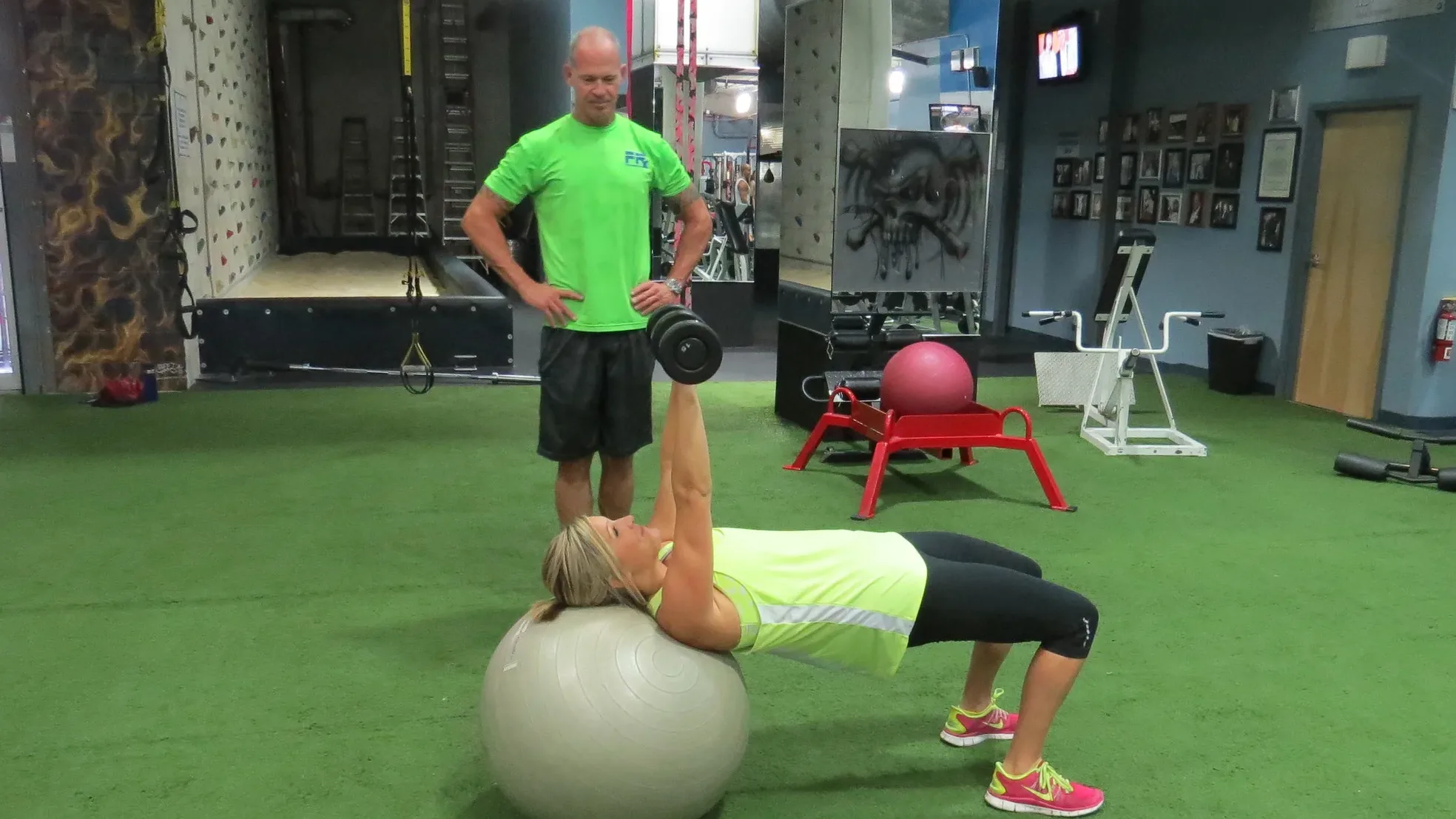
That is what the free first session is for. Alongside a free body-fat analysis, it includes a fitness evaluation of four things, and each one answers a question that matters at seventy:
Balance. How steady you are on one leg, and when you turn. Every stair, curb and shower asks for it.
Strength. A baseline for the legs and hips that get you out of a chair, so the weight in week three is a decision, not a guess.
Flexibility. Where you are actually stiff, often the hips, ankles and upper back: the difference between glancing over your shoulder in the driveway and turning your whole body.
Coordination. Whether you can step, turn and reach while staying upright, which is most of what a kitchen or a parking lot asks of you.
None of it is pass or fail. It is a starting point, written down, so progress is measured rather than guessed at. Results normally show within four to six weeks of consistent training.
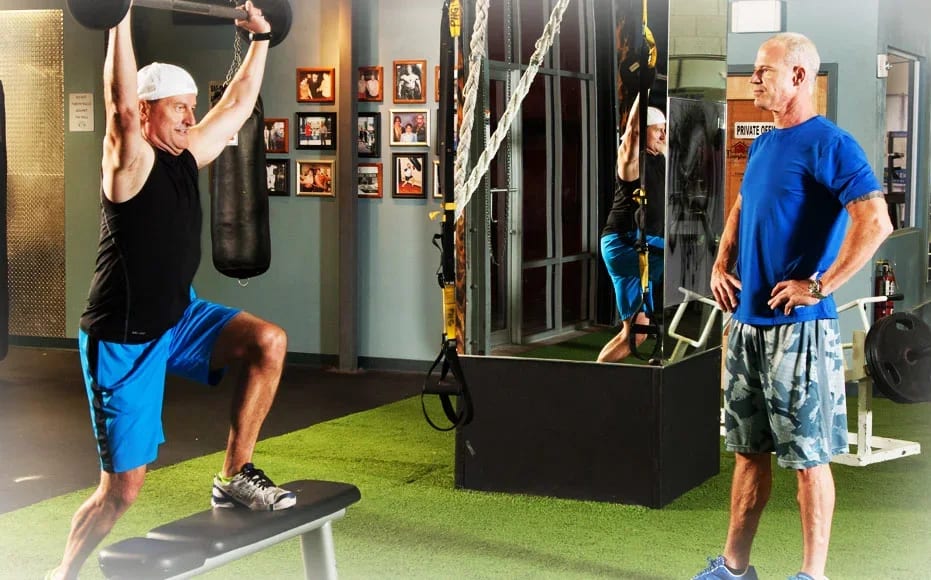
A step-up is a stair, trained. This is where the work can lead after months of practice, not where anybody starts.
What Strength and Balance Training Looks Like After 60
01
Legs and hips first
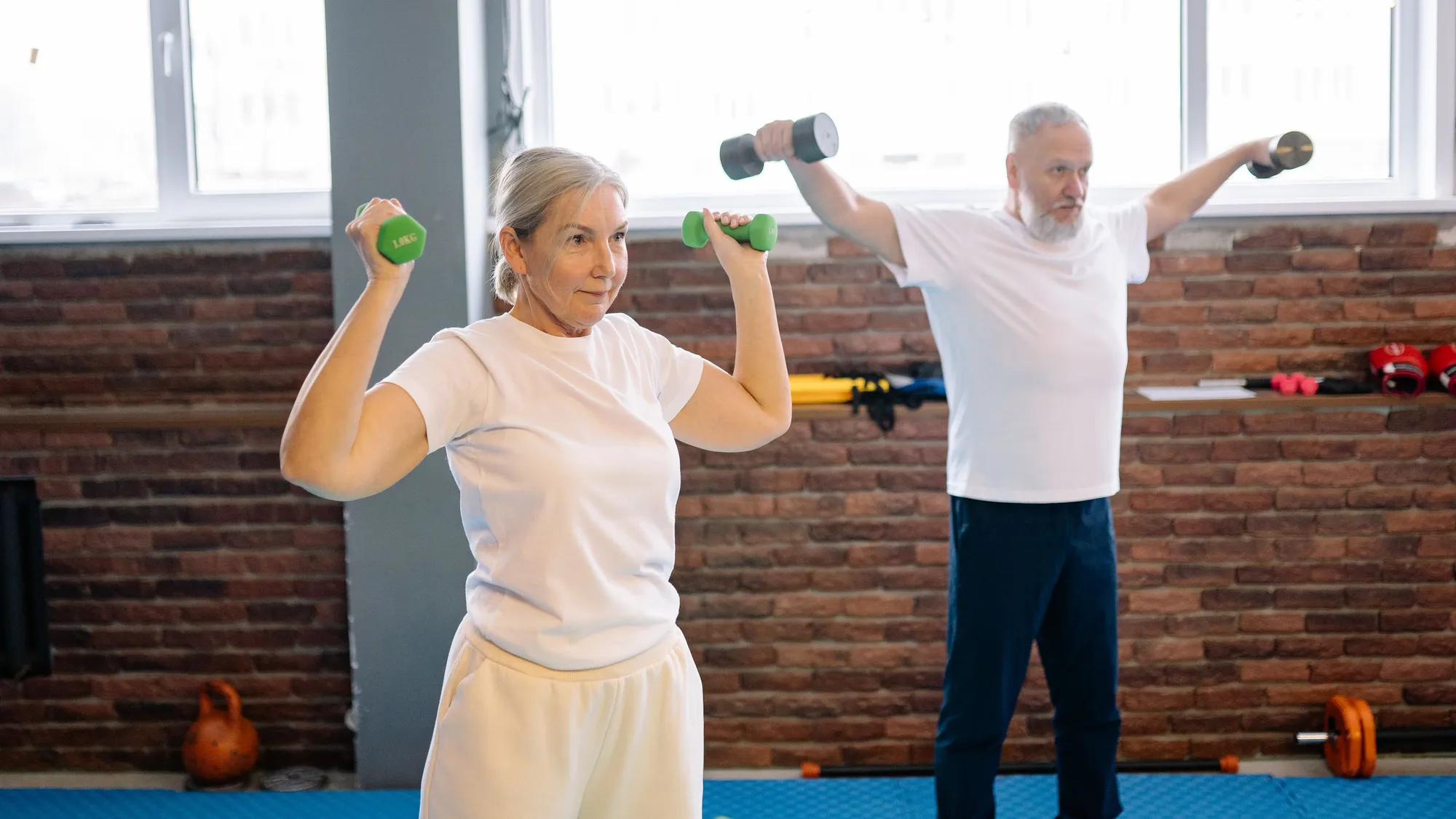
Standing up from a box, step-ups beside something solid, and hip work, starting with body weight. These are the muscles every chair, stair and curb asks for.
02
Balance in every session
A few minutes each time rather than a separate class: heel-to-toe walking, standing on one leg beside a support, stepping in different directions. Practised like any skill, a little and often.
03
Core and posture
Staying upright, and turning without reaching for the furniture. Two of my courses are about exactly this: “Core Training for Seniors” (2017) and “Standing Tall: Exercise and the Aging Spine” (2019).
04
Weight only when you have earned it
Form is corrected inside the set, not next week. Load goes up when the last session went well, and not before. Steady is the goal. Heavy is optional.
Between sessions, the work is mostly walking and the homework we agree on. We talk about what you eat and how you sleep, and I hold you to what you told me. I am not a dietitian, and anything medical goes to your doctor.
My fitness and personal training philosophy is that if you make small changes every day, it will result in a huge transformation over time.
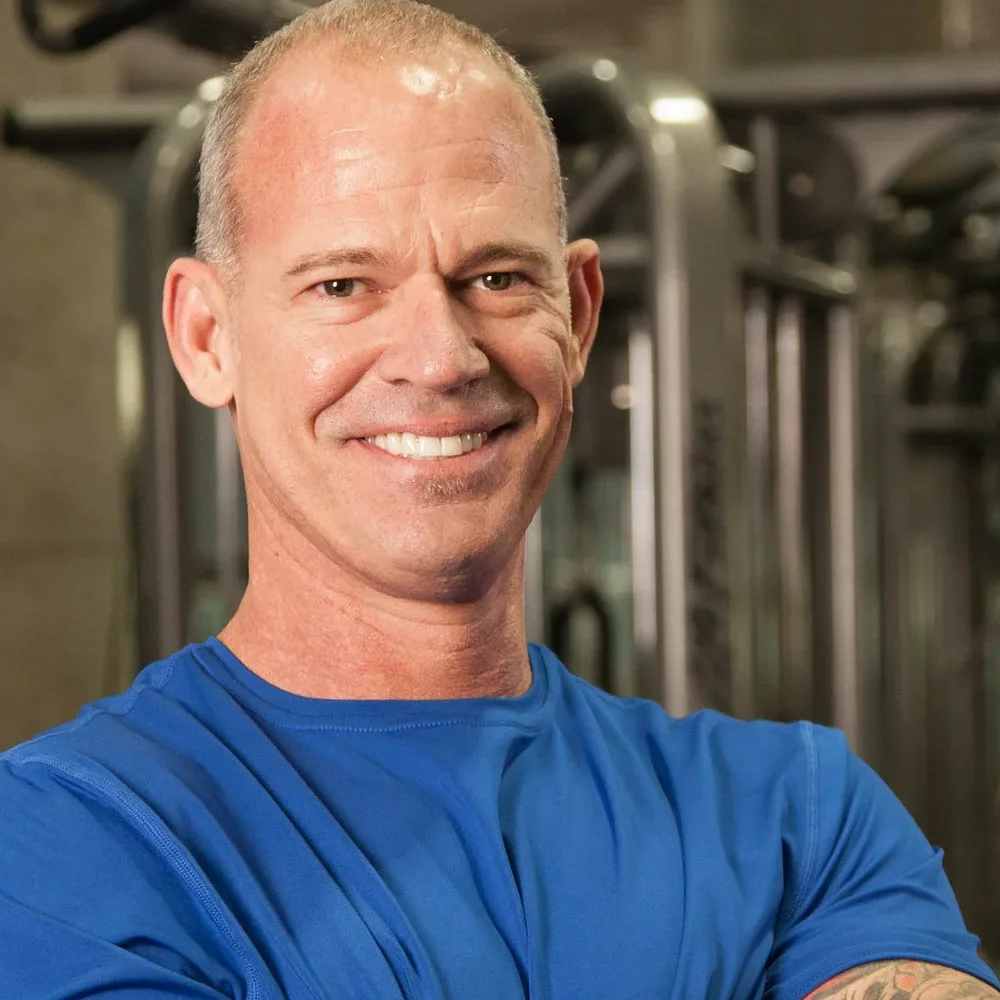
Craig Chapin, NASM Certified Personal Trainer
Not All Personal Trainers in Tampa Are Made Equal
Least of all after sixty. A trainer who is excellent with twenty-five-year-olds can be the wrong person for a seventy-year-old with a stiff hip.
Four questions worth asking any trainer you are considering:
What older-adult training have you done? Not “do you train seniors”, but what coursework, and when.
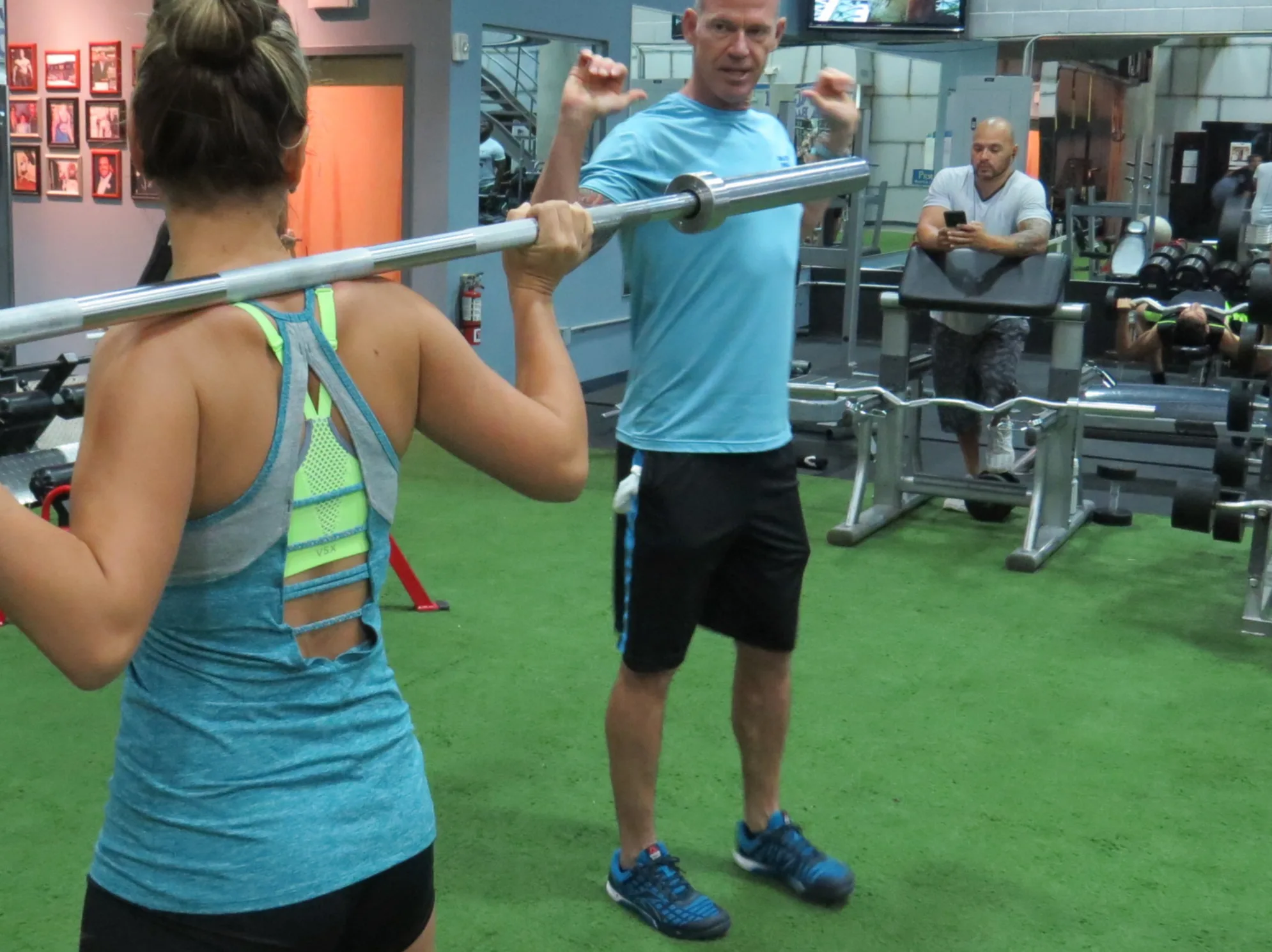
Will you test my balance before you load me? If the answer is a workout in the first ten minutes, keep looking.
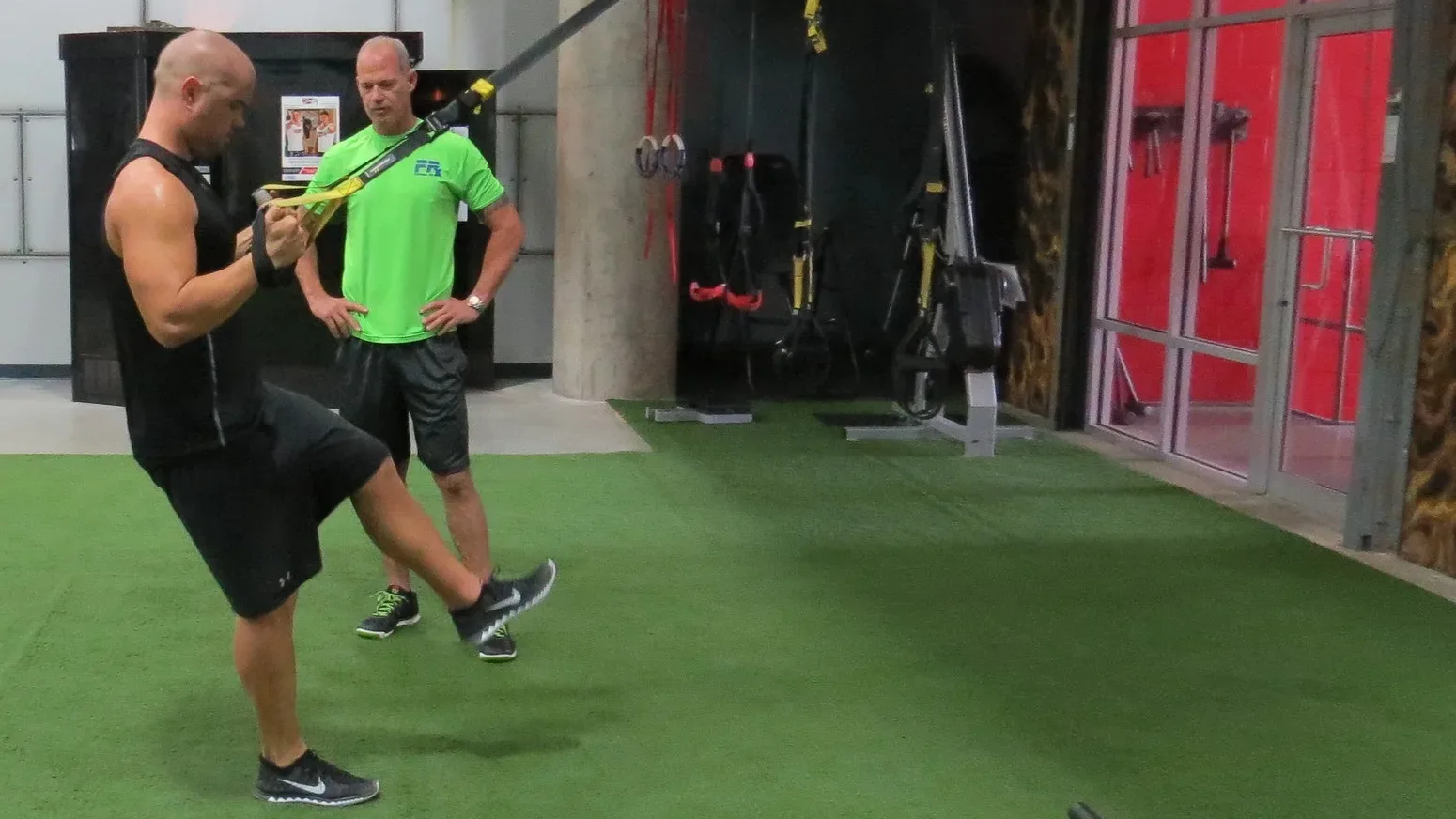
Who runs my sessions? The person who evaluates you should be the person watching every rep after it.
What happens when something hurts? The right answer changes the exercise, and sends anything medical to your doctor.
My answers: NASM certified since 2004, 20+ years training clients privately, and 31 continuing-education courses from 2009 to 2019. The largest group, 13 of them, is older-adult training, including “Balance and Fall Prevention” (2015), “Strength and Conditioning for Seniors” (2017), “Essential Functional Exercise for Seniors” (2015) and “A Dozen Practical Exercises for Seniors” (2017). CPR/AED and BLS training are on the record too, and I train every client myself. The full list, with years, is on the About page.
Getting Stronger at 65, in a Client’s Own Words
Sherry was 65 when she wrote this, and still working as a hairdresser.
“I am a 65 year old and feel great because you know what you are doing and make me work to my fullest potential and never let me slack off… I am getting stronger.”
Sherry, 65Hairdresser*Individual results may vary. Testimonials from past clients do not represent a guarantee and are not intended to create an expectation of similar results in future clients.
Look at what she credits: somebody who knows what they are doing, and who will not let her coast. That is the whole job at sixty-five, and at seventy-five. Hers is one of four stories on the success stories page.
Private Sessions, or Training With Your Spouse
There are two ways to train with me, or a mix of both, and the full price list is published.
Private · 30 minutes
$60 a session
A focused session on legs and balance, and easier to fit around a week of appointments.
Private · 60 minutes
$120 a session
Strength, balance and the stretching most people skip on their own. The better fit when there is a lot to build.
Buddy Sessions
Ask me for the rate
Partner training with a spouse or friend you bring, scaled to each of you. Already active? The small group is metabolic conditioning, scaled to you, and the first group session is free. Ask me for the rate.
Packages come as Jump Start (12), Head Start (24) and Transformation (36), at the single-session rate. Most people start at two sessions a week, which leaves room to recover between them.
Training in South Tampa, Seven Days a Week
All training is in person at Empire MMA and Fitness, 5006 S MacDill Ave in South Tampa. Sessions run Monday – Sunday, so a standing time that suits you is easier to keep than a class timetable. Clients come from South Tampa, Westshore, Brandon and Channelside.
If you want a personal trainer for seniors in South Tampa who tests before loading and stays beside you while you train, the first session costs nothing. Reading this for a parent? It is the easiest way for them to find out. Call 813-310-4323, or ask a question first on the contact page.
For most older adults, yes, once their doctor has cleared them to exercise. What makes it safe is how it starts: light, closely watched, on movements you can control, with weight added only when the last session went well. Strength responds to training at any age.
How often should older adults do strength and balance training?
The CDC’s guidelines for adults 65 and older call for muscle-strengthening activities at least two days a week, plus activities that improve balance. Most people start with me at two sessions a week, with walking on the days between.
Can a personal trainer help prevent falls?
No trainer can promise you will never fall, and nobody honest will. What training can do is build the leg strength and balance the CDC recommends for adults over 65. Your doctor belongs in that conversation too, about medication, eyesight and anything that makes you dizzy.
Can I train with my spouse or a friend?
Yes. Buddy Sessions are partner training with a spouse or friend you bring, scaled to each of you; ask me for the rate. And send a friend my way: if they come in for a session, you get another personal training session free.
What happens at the free first session?
A free body-fat analysis, a free fitness evaluation testing balance, strength, coordination and flexibility, and a one-on-one workout built around your goals. It is in person at Empire MMA and Fitness on S MacDill Ave, and there is nothing to buy at the end of it.
Start Here
The First Session Is Free. Find Out How Steady You Are.
Let me test your balance, strength, coordination and flexibility, and leave with a plan built for the body you have now. It costs nothing, and there is nothing to buy at the end of it.
Your strength, stamina and waistline stopped cooperating somewhere after fifty, and the program that worked at thirty-five now leaves you sore for days. Here is what changes, and how to train for it.
Physical therapy has signed you off, your surgeon is pleased, and you still take the stairs down one at a time. Here is how the strength comes back from here, for a new knee or a new hip.
Your back is stiff by three in the afternoon, the last class you tried left you on the floor for two days, and you still want to be strong. Here is the order those things have to happen in.