Do Waist Trainers Work? What New Moms and Women Over 40 Should Know
A waist trainer changes your shape for exactly as long as it is laced. Here is what it actually does, the five claims it is sold on, and what changes your waist for good.
The ad shows a tiny waist, a laced-up band and a promise: wear this a few hours a day and the belly goes. So you typed do waist trainers work before you clicked buy. Good. That is the right question.
I have spent 20+ years training clients privately in South Tampa, plenty of them new moms and women over 40, and I get asked this more than almost anything. Here is the straight answer, then the claims one at a time.
What a Waist Trainer Actually Does
A waist trainer is a tight compression band, usually latex or a stiff fabric with hooks or laces, worn around your middle. Strip away the marketing and it does three things:
It squeezes. Soft tissue around your middle gets pressed in and pushed up or down. That is a change of shape, not a loss of anything.
It makes you sweat. Wrap anything tight around your body in Tampa and you will sweat under it. Sweat is water, and you drink it back by dinner.
It holds you upright. A stiff band stops you slouching, which feels like support. It is support, the way a cast is support: it does the holding so your muscles do not have to.
That last one matters more than it sounds, and it is the thread through everything below.
Do Waist Trainers Work? Five Claims, Checked
Claim 1: “It burns belly fat.”
It does not. The heat and sweat under the band are water, not fat. And you cannot choose where your body takes fat from. Squeezing your stomach does not send it there first. Fat comes off the whole body, slowly, from how you eat and how you train.
Claim 2: “It trains your core.”
This is the one I push back on hardest. Your deep core is a layer of muscle that wraps your middle and holds you steady. A waist trainer does that job for it. Muscle that gets held all day does not have to hold, and muscle that does not have to hold does not get stronger. Hours in a waist trainer can leave the very muscles you want back doing less, not more.
Claim 3: “Wear it long enough and the shape stays.”
Whatever shape it gives you is on loan. Soft tissue springs back when the pressure comes off. The photo in the ad was taken with the band on, or after it had just come off.
Claim 4: “It helps you eat less.”
It can make a full meal, and a full breath, uncomfortable. That is a squeeze, not appetite control, and it is not a habit you keep. Take the band off and the appetite is right where you left it. The eating that changes your waist is the eating you could still be doing a year from now without anything laced around you.
Claim 5: “It is postpartum recovery.”
Here it is worth being careful, because two different things get sold under one word. Some doctors recommend a soft abdominal binder or support garment for a while after a birth, especially after a cesarean, for comfort while you heal. That is a medical decision, and it belongs with your OB or midwife. A fashion waist trainer laced tight to shrink your waist is not that, and it does not rebuild anything.
Squeezing your middle hard also pushes that pressure somewhere, and after a birth the pelvic floor is the layer you least want to load before it is ready. If you are thinking about wearing anything tight after having a baby, ask your OB, your midwife or a pelvic floor physical therapist first.
Why Waist Trainers Are Sold to New Moms and Women Over 40
Because both have a midsection that changed for reasons that are not their fault, and both are tired of being told to just do more crunches. A garment that promises the middle back without any of that is an easy sell. But the reasons it changed are the reasons a garment cannot touch:
After a baby
The abdominal wall stretched for nine months, and the two halves can sit further apart afterwards. It has a name: diastasis recti.
The pelvic floor carried the pregnancy and took the delivery.
Sleep is short and the hour you have is shorter.
After 40
Muscle fades a little at a time when nothing asks for it, and the middle is often where that shows first.
Eating less and adding cardio stops paying after a while.
Hormonal changes are real too, and that conversation belongs with your doctor.
Every item on both lists is either a medical question or a training question. None of them is a squeezing question. If the scale is the bigger worry after 40, I wrote a whole guide to that.
What Actually Changes Your Waist
Three unglamorous things, done at the same time. No supplement does this for you, and no garment does it alone.
01
Rebuild the deep core first
Breathing, bracing, bridging, and slow work like dead bugs and bird dogs, before crunches and sit-ups. This is the layer a waist trainer imitates. Trained, it holds you in all day without anything laced around it.
02
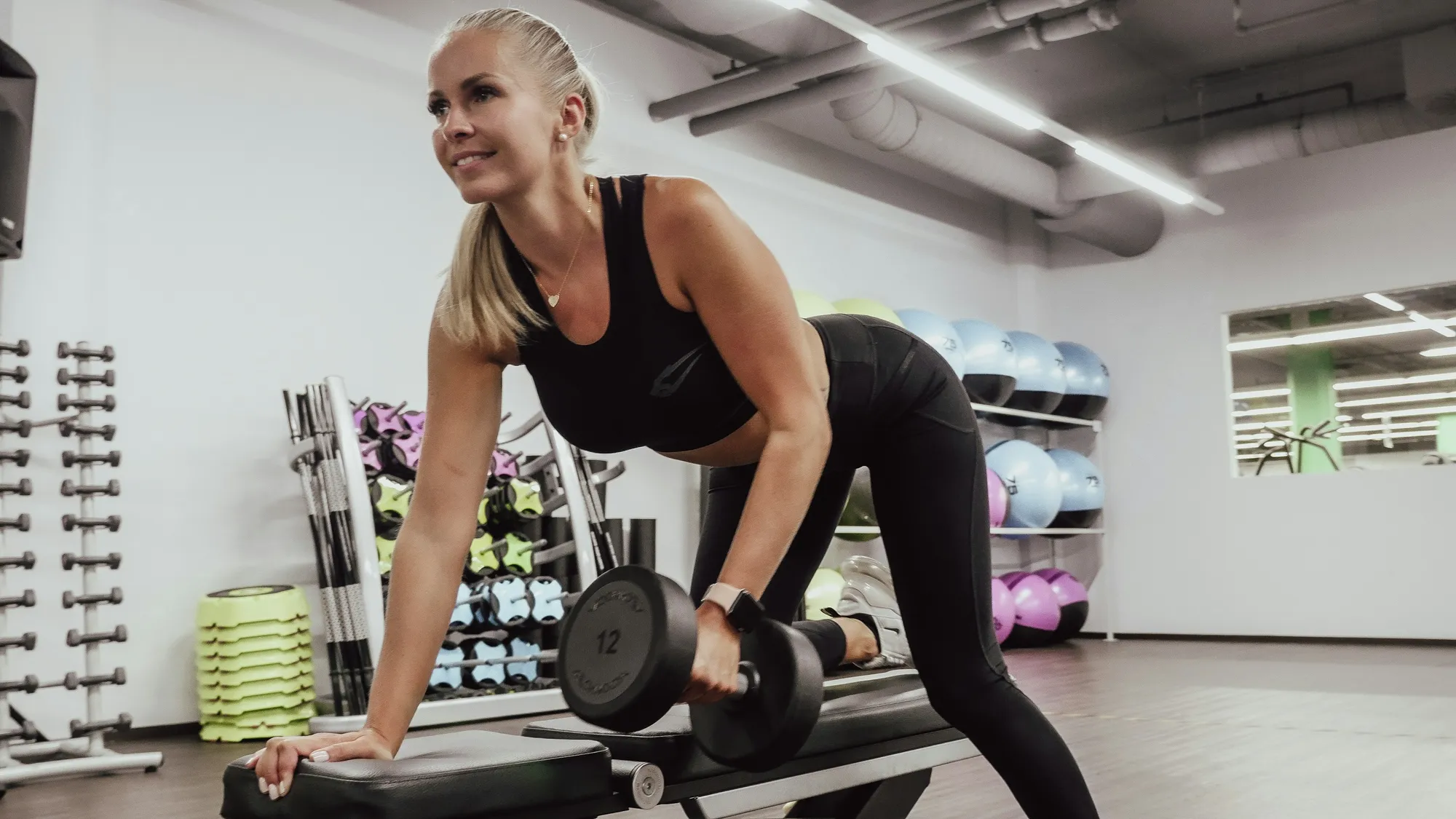
Strength-train the whole body
Squats, rows, presses, lunges and carries. The CDC’s guidelines for adults (opens in a new tab) call for muscle-strengthening work at least two days a week across every major muscle group. Muscle is what gives a waist its shape, and every big lift makes your core brace for real.
03
Eat in a way you can keep
Protein and vegetables at most meals, and no starving. One change at a time, kept, then the next one.
04
Give it weeks, not hours
With consistent training, results normally show within four to six weeks. That is slower than a waist trainer, and it is still there when you take your clothes off.
Building core strength to lose inches around the waist is one of the things I list on my About page, and it can ease lower back pain as well, which is why my back-pain guide starts in the same place. Two of my courses sit right here: “Training the Core” (2015) and “Core Training: Working Hard or Hardly Working?” (2019).
For New Moms: Rebuild Your Core From the Inside
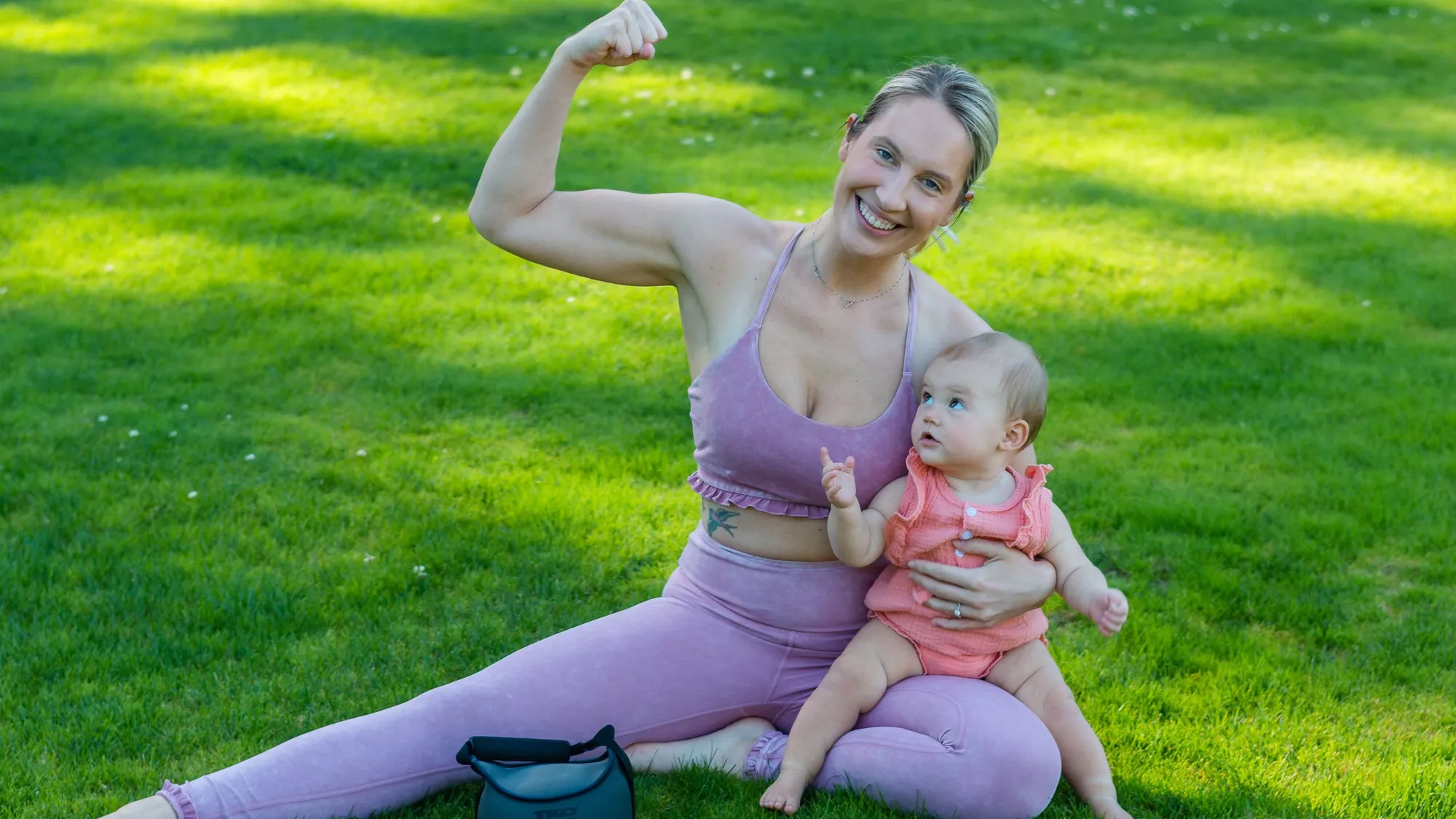
First things first: everything here starts after your OB or midwife has cleared you to exercise. That is usually around six weeks, and later after a cesarean (C-section) or a difficult delivery. Until then, resting is the training.
After that, coming back runs in three stages, and not one of them is a race. This is how I take new moms through it:
01
Before you are cleared
The first weeks are not a training block. They are recovery, and the work genuinely is rest, water, and getting outside on the days you can face it.
02
Cleared: reconnect
Quiet work: breathing, bracing, bridging, and getting your posture back after months of leaning around a bump. It is the stage most people skip, and a good part of why so many post-baby plans stall around week four.
03
Rebuild
Short blocks, short rests, over before you have had time to dread it. The weight stops being the point: strength, energy, and a car seat up a flight of stairs without thinking about it are what stay.
Notice where the deep core sits: the second stage, the one most people skip, and the reason so many post-baby plans stall. A waist trainer skips it too. The twelve-week plan, the short sessions and three moves you can do at home are on the postpartum personal trainer page.
The workouts were challenging but fun. Every session was something new.
Meagen, new mom, postpartum training
For Women Over 40: Build the Muscle That Holds You In
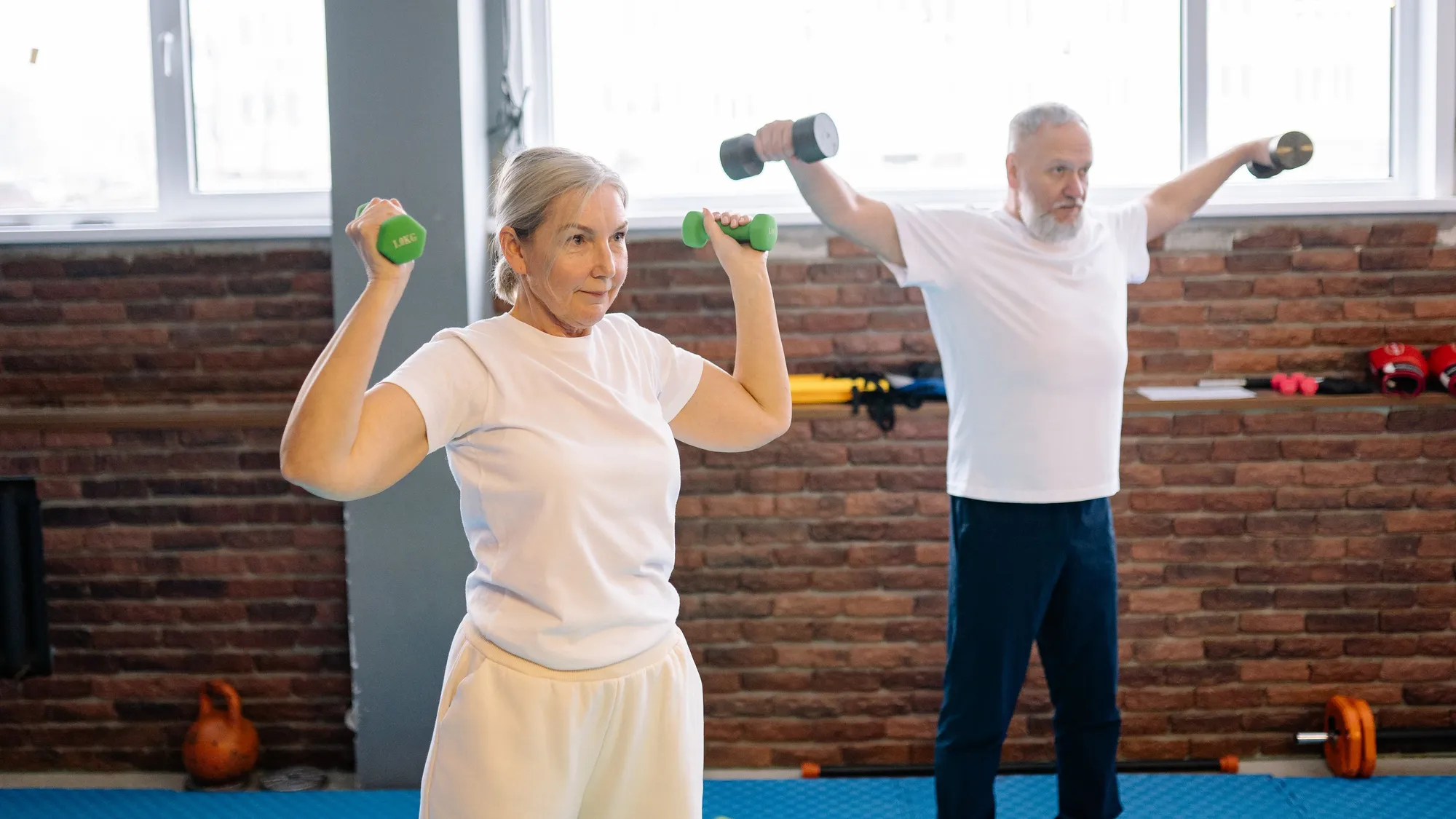
After 40, the waist trainer is usually sold as the answer to a middle that softened while you were busy with everything else. The honest answer is the one nobody wants to sell you: lift. Muscle you build stays when you get dressed in the morning. Muscle a band holds in place does not.
What that looks like with me:
An evaluation before any load. Balance, strength, coordination and flexibility, so we start where you are, not where a program assumes you are.
Weights that are heavy for you. Load goes up when the last session went well.
Core work in every session. Not a hundred crunches at the end, but bracing under real load, all session long.
Form fixed mid-set. If your technique drifts, we stop and fix it right then.
And no, you will not get bulky. What most women notice first is that their clothes fit differently, without anything laced underneath them. The rest of the case is on the strength training for women page.
Waist Trainer or Personal Trainer: An Honest Comparison
If you are deciding where to spend the money, here is what each one actually gets you.
A waist trainer
A smaller-looking waist while it is on.
Posture held for you, which your own muscles stop practising.
Sweat, which is water.
Nothing left once it comes off.
Training your core and strength
A deep core that holds you in all day.
Muscle that shapes your waist and stays.
Fat loss across your whole body, at a pace that lasts.
Often an easier back, and a car seat up the stairs without thinking about it.
If You Buy One Anyway
It is your money and your body. If you want one for an outfit or an evening, treat it like shapewear, not like training:
Short wear only. An event, not a workday, and never overnight.
Never during exercise. You need to breathe deeply and brace for yourself when you train. A band stops you doing both.
A fit you can breathe in. If a full breath feels hard, it is too tight.
Not before you are cleared. After a birth or surgery, nothing tight goes on until your OB, midwife or surgeon says so.
Take it off at the first warning sign. Pain, numbness, tingling, heartburn or shortness of breath.
Training With Me in South Tampa
I have been NASM certified since 2004, and I train every client myself, in person at Empire MMA and Fitness, 5006 S MacDill Ave in South Tampa. Sessions run Monday – Sunday, one-on-one or as Buddy Sessions with a friend, so a standing time before work or on a Saturday morning is easy to keep.
Private sessions are $60 for 30 minutes or $120 for 60 minutes, and the packages and prices are published. The first session is free. Book it here, and I will call you within 24 hours to set the time, or call me on 813-310-4323. Bring a friend if you like: if they come in for a session, you get another personal training session free.
Waist Trainer Questions I Get Asked
Do waist trainers work for weight loss?
No. A waist trainer squeezes soft tissue and makes you sweat, and sweat is water you drink back. Fat comes off the whole body, slowly, from how you eat and how you train. Squeezing your stomach does not make it come off there first.
Can a waist trainer flatten my stomach after pregnancy?
Only while it is on. What flattens a postpartum stomach for good is rebuilding the deep core and pelvic floor once your OB or midwife has cleared you, then strength training. A soft binder your doctor recommends for comfort after a birth is a different thing, and that decision belongs with them.
Does a waist trainer help diastasis recti?
It does not close the gap. Diastasis recti is the two halves of the abdominal wall sitting further apart after pregnancy, and it is rebuilt from the inside: breathing, bracing and gentle bridging first, with crunches and sit-ups waiting. If you think you have it, ask your OB, midwife or a pelvic floor physical therapist to check.
Should I wear a waist trainer while working out?
No. Training asks you to breathe deeply and brace your own core, and a tight band stops you doing both. The bracing is the part that makes your core stronger, so let your muscles do it.
Do waist trainers work for women over 40?
The same way they work for anyone: a smaller-looking waist while laced, and nothing after. After 40 the better answer is strength training at least two days a week, core work under real load and food you can keep eating. Hormonal changes are a conversation for your doctor.
What works better than a waist trainer for a smaller waist?
Deep core work, whole-body strength training and steady eating habits, done together. With consistent training, results normally show within four to six weeks, and they stay when you get dressed. Your first session with me is free, with a body-fat analysis and a fitness evaluation, and there is nothing to sign.
Start Here
Skip the Laces. Start With Your Core.
Tell me what you have tried and what your week looks like, get a body-fat reading and a fitness evaluation, and leave with a plan that builds the muscle a waist trainer only imitates. There is nothing to buy at the end of it.
You eat less than you did at thirty, you walk Bayshore three mornings a week, and the scale has not moved since spring. Here is what actually works for weight loss after 40.
The stairs feel steeper, your hand finds the railing without asking, and the curb that caught your toe last month is still on your mind. Here is how strength and balance get trained back.
Your strength, stamina and waistline stopped cooperating somewhere after fifty, and the program that worked at thirty-five now leaves you sore for days. Here is what changes, and how to train for it.